

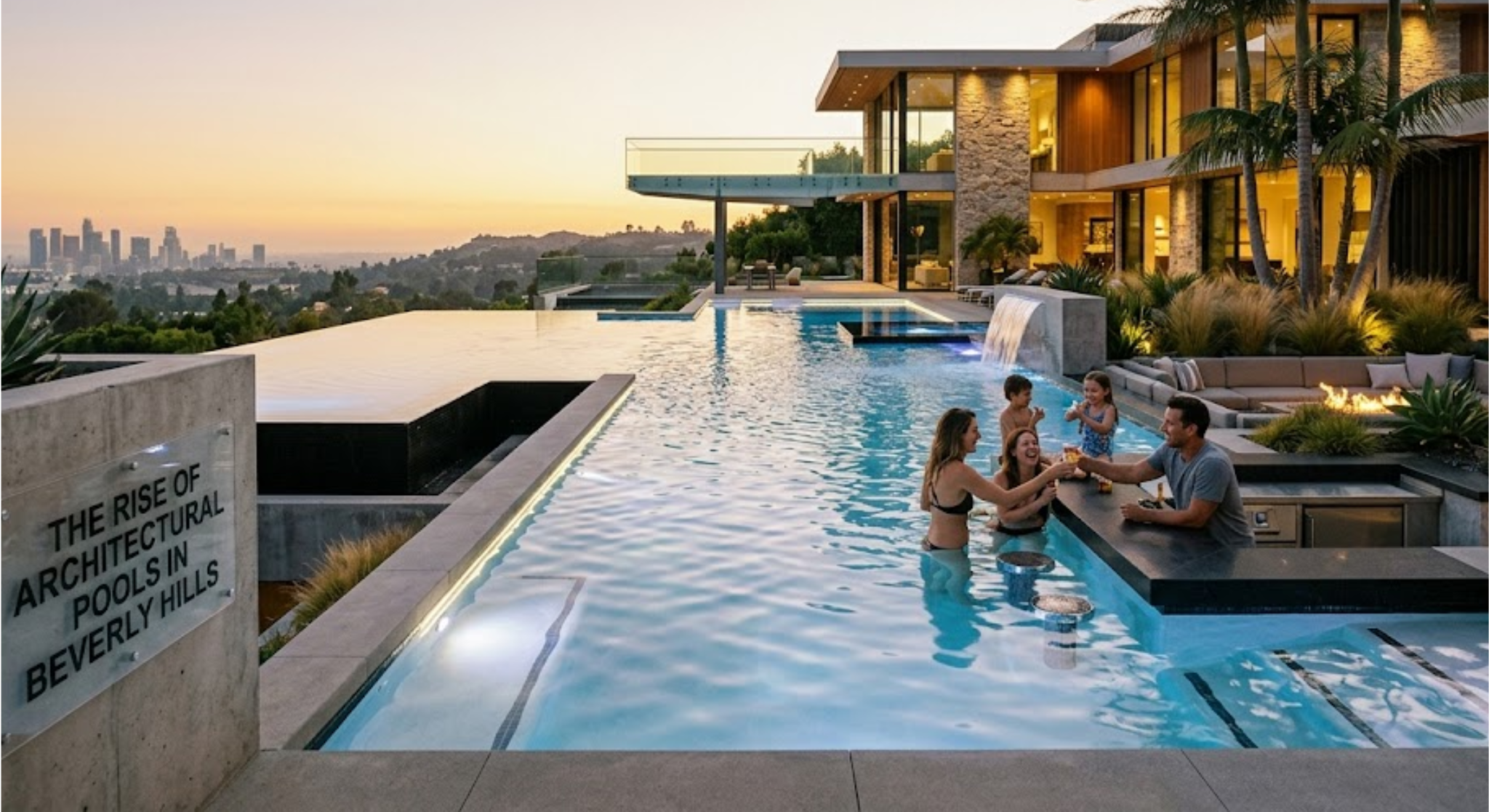
In the upper echelons of Southern California real estate, a backyard pool is no longer merely a place to cool off, it is a bespoke work of art. The “architectural pool” has become the defining centerpiece of luxury homes in the 90210 zip code, designed to function as a stunning visual extension of the home itself.
Building these highly engineered aquatic centerpieces requires an unparalleled level of precision. From concept to completion, choosing the right Beverly Hills Pool Builder helps ensure the project stays on schedule and reflects the homeowner’s preferred aesthetic. Here is a look at the trends driving the rise of architectural pools and what it takes to bring these breathtaking designs to life.
1. The Era of the Reflecting Pond
Modern Beverly Hills architecture favors clean lines, expansive glass walls, and a seamless flow between indoor and outdoor living. Architectural pools mirror this aesthetic by acting as massive, glass-like reflecting ponds when not in use.
To achieve this flawless reflection, builders utilize dark interior finishes (such as black or deep navy pebble blends) and highly specialized edge designs. The organic, kidney-shaped pools of the past have been entirely replaced by stark, minimalist geometries that draw the eye toward a canyon view or a specific architectural focal point of the property.
2. Mastering Complex Edge Profiles
The true mark of a luxury architectural pool is what happens at the water’s edge. Achieving these profiles requires extreme hydraulic precision and structural tolerances as tight as 1/16th of an inch.
| Edge Profile | Visual Effect | Architectural Purpose |
|---|---|---|
| Perimeter Overflow (Knife Edge) | Water sits perfectly flush with the deck, flowing silently into a hidden millimeter-wide slot. | Eliminates all visual barriers, making the deck and water appear as one continuous, flat surface. |
| The Infinity Edge | Water cascades over a lowered weir wall, seemingly vanishing into thin air. | Blends the pool’s surface with dramatic hillside or city skyline views, drawing the eye outward. |
| Floating Stepping Stones | Pre-cast concrete or stone pads that hover just millimeters above the water’s surface. | Allows homeowners and guests to “walk on water” to reach a sunken fire pit or integrated spa. |
Export to Sheets
3. Conquering Hillside Engineering
Many of the most exclusive neighborhoods in Beverly Hills, such as Trousdale Estates, are situated on steep, unforgiving terrain. Building a massive vessel of water on a slope requires a pool contractor who doubles as a master of structural engineering.
Expert Insight: You cannot simply dig a hole on a hillside. Architectural pools in the canyons almost always require a foundation of deep steel caissons (pillars drilled deep into the bedrock) and heavy-duty grade beams to support the immense weight of the water and prevent the structure from sliding down the hill during seismic activity.
4. Seamless Material Integration
An architectural pool never looks like an afterthought; it looks like it was poured at the exact same time as the home’s foundation. This is achieved through deliberate material continuity. Top-tier Beverly Hills builders work closely with the home’s architect to ensure that the large-format porcelain, imported Travertine, or dark Basalt used in the living room flows uninterrupted out through the sliding glass doors and straight up to the edge of the water.
Conclusion
An architectural pool is the ultimate synthesis of design, hydraulic engineering, and high-end construction. It elevates a property from a standard luxury home to a world-class estate. By partnering with a dedicated Beverly Hills pool builder who understands the rigorous demands of modern geometry, hillside structural support, and strict local permitting, you ensure that your backyard transformation is executed flawlessly from the first sketch to the final fill.
Frequently Asked Questions (FAQ)
Q: How long does it take to build an architectural pool in Beverly Hills?
A: Due to the complex hillside engineering, soil testing, and notoriously strict permitting process with the City of Beverly Hills, designing and building a high-end architectural pool typically takes anywhere from 6 to 12 months.
Q: What makes a perimeter overflow (knife-edge) pool so much more expensive?
A: Knife-edge pools require a massive, hidden subterranean catch basin to hold the displaced water when people enter the pool. They also demand complex hydraulic systems and absolute perfection in leveling the pool shell—if the shell is off by a fraction of an inch, the water will not flow evenly over the edge, ruining the effect.
Q: Do dark pool finishes make the water too warm?
A: In the sunny Southern California climate, dark finishes will naturally absorb more UV heat, which can actually help lower your pool heating bills during the spring and fall. However, their primary purpose in luxury builds is aesthetic, as they create the highly sought-after “mirror” effect that reflects the home and the sky.