

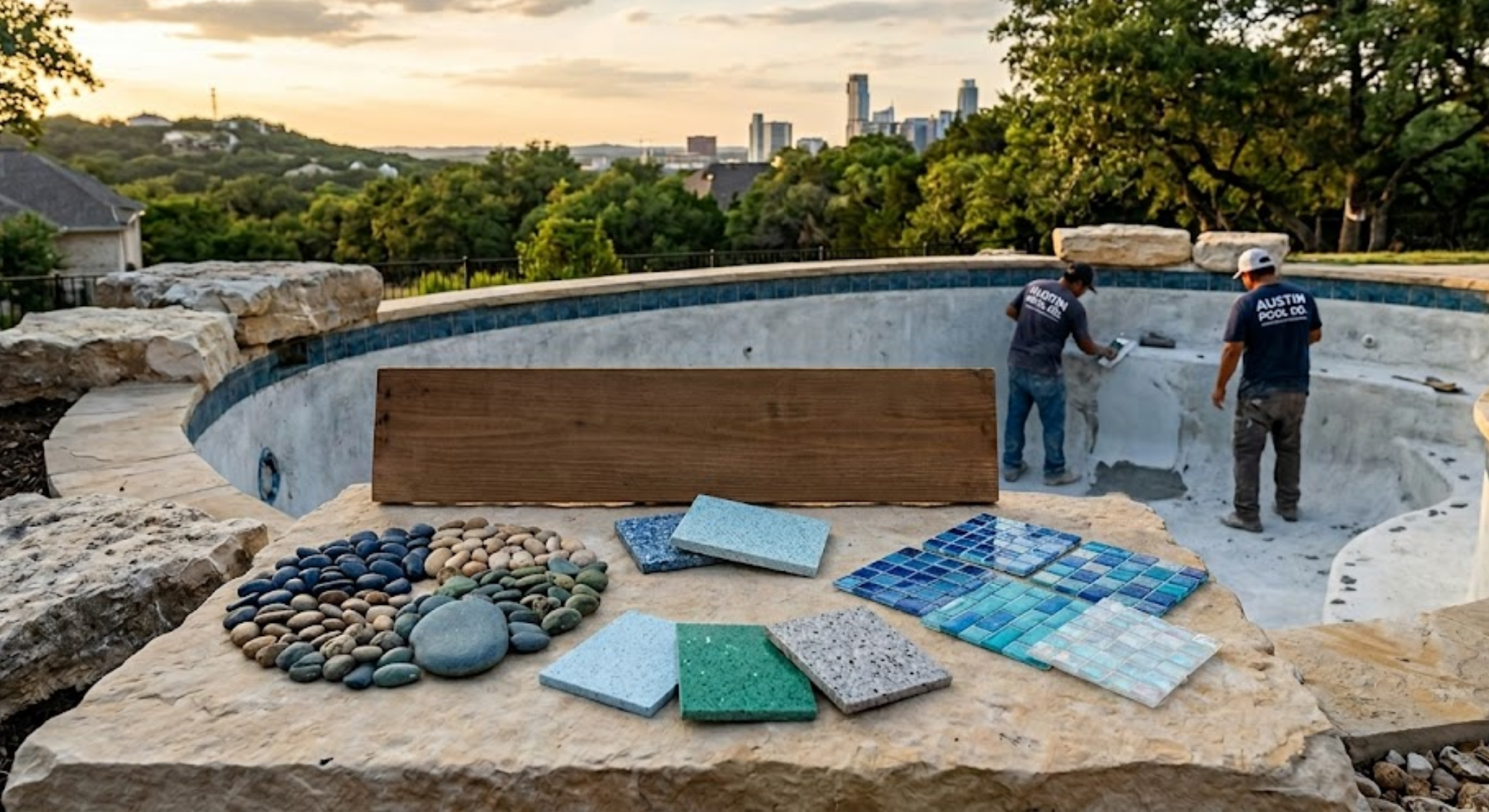
When the scorching summer sun hits Central Texas Click to open side panel for more information , your backyard swimming pool becomes the undisputed centerpiece of your home. But over the years, the relentless heat, constant UV exposure, and shifting water chemistry can take a massive toll on your pool’s interior finish. If your pool is starting to look faded, feels rough to the touch, or is constantly battling stubborn algae blooms due to a pitted surface, it is officially time to consider a renovation.
Navigating the world of pool interior finishes can be overwhelming for homeowners. From quartz to pebble finishes, material choice matters in pool resurfacing in Austin, TX. Clear Solutions helps you compare the options. Making the right choice ensures not only a breathtaking aesthetic upgrade but also guarantees long-term durability and significantly easier chemical maintenance. Whether you are looking for a budget-friendly refresh or a luxury, resort-style transformation, expert Pool Resurfacing Austin TX begins entirely with selecting the perfect structural material.

Austin
Here is a comprehensive breakdown of the best materials available for your Austin Click to open side panel for more information pool remodel to help you make a highly informed, confident investment.
1. Traditional White Plaster (Marcite): The Classic Baseline
Traditional white plaster, often referred to within the industry as marcite, is the most common and historically popular pool finish. It is a simple, proven mixture of white Portland cement, marble dust or limestone, and water.
- Aesthetics: Plaster provides a highly classic, clean look. When filled with balanced water, a white plaster pool reflects a beautiful, bright, traditional light blue tint.
- Texture: Out of all the finishes on the market, newly applied marcite offers the smoothest feel beneath your feet, making it exceptionally comfortable for families with small children who spend hours in the shallow end.
- The Drawbacks in Texas: While it is unquestionably the most affordable option upfront, standard plaster is highly susceptible to the region’s hard water and chemical fluctuations. Over time, the surface can easily become etched, stained, and porous, typically requiring a complete resurfacing every 7 to 10 years.
2. Quartz Aggregate Finishes: The Upgraded Middle Ground
If you want to step up from basic plaster without moving all the way into the premium pricing tier of pebble finishes, quartz aggregate is an exceptional, highly strategic choice. This material fundamentally blends standard plaster with crushed, ceramic-coated quartz crystals.
- Enhanced Durability: Quartz is one of the hardest natural minerals on earth. By mixing it into the cementitious base, the interior surface becomes significantly more resistant to chemical wear, acidic water conditions, and physical chipping.
- Vibrant Color Customization: Unlike standard plaster, quartz finishes can be dyed in a vast array of colors. The quartz crystals themselves can be vividly colored (such as rich blues, teals, or deep greys), giving the water a deeper, more dynamic, and highly customized hue that will not easily fade in the sun.
- Longevity: A high-quality quartz finish applied by seasoned professionals typically lasts between 10 to 15 years, making it a stellar return on investment for local homeowners.
3. Exposed Pebble Finishes: The Premium Standard for Longevity
For those seeking the ultimate in structural durability and a truly luxurious, natural aesthetic, exposed pebble finishes are the industry’s gold standard. These premium finishes consist of a specialized cement mixture heavily loaded with smooth, naturally polished river pebbles sourced from around the world.
- Unmatched Resilience: Exposed pebble is virtually impervious to the aggressive chemical etching that plagues standard plaster. The dense stone matrix stands up brilliantly to high temperatures and heavy bather loads, consistently offering a functional lifespan of 15 to 20 years or more.
- Stunning Visual Depth: Pebble finishes transform the water color dramatically depending on the specific stone blend chosen. Options range from sparkling tropical turquoises to deep, reflective lagoon blacks and rich navy blues.
- Texture Variations: Some homeowners worry that pebble finishes might be too rough on their feet. However, modern application techniques offer “mini-pebble” or “micro-pebble” varieties, which use much smaller, finely polished stones. This creates a beautifully textured, highly slip-resistant surface that remains completely gentle on the skin.
4. Polished Marble and Glass Finishes: The Pinnacle of Luxury
At the absolute high end of the resurfacing spectrum are specialized polished marble and glass bead finishes. These materials are chosen by homeowners who want a truly bespoke, resort-quality backyard.
- Glass Bead Blends: Integrating smooth, iridescent glass beads into a pebble or quartz matrix creates an unparalleled three-dimensional sparkle. The glass catches the sunlight during the day and reflects ambient LED lighting perfectly at night.
- Polished Excellence: These premium surfaces are mechanically polished using diamond pads after application. This process yields an incredibly smooth, glass-like texture that resists algae rooting and chemical staining better than almost any other material on the market.
5. How to Choose the Right Material for Your Backyard
Selecting the right finish ultimately comes down to balancing your upfront budget with your long-term goals for the property.
- If you are preparing to sell your home: A standard plaster or basic quartz upgrade provides a clean, beautiful, and highly marketable look at a lower initial cost, maximizing your immediate property value.
- If this is your “forever home”: Investing in a premium exposed pebble or glass-infused finish is the most financially strategic move. It drastically reduces your long-term chemical maintenance costs and extends the time between renovations by a full decade.

Clear Solutions Pool Plastering, LLC
4.6
📍 General contractor
Open· Closes 7:00 PM
Partnering with an elite local contractor is non-negotiable. At Clear Solutions Pool Plastering, LLC Click to open side panel for more information , their team conducts thorough site evaluations to help you match the right material to your specific usage habits, budget, and desired backyard aesthetic.
Conclusion
A pool remodel is an exciting opportunity to completely redefine your outdoor living space. By moving away from outdated, failing plaster and exploring advanced quartz, pebble, or premium glass finishes, you secure a surface that not only looks spectacular but can withstand the unique environmental demands of the state. Whether you desire a classic bright blue oasis or a dark, natural lagoon, choosing the right material ensures your investment remains crystal clear, inviting, and structurally sound for decades to come. Do not settle for less; trust the local experts to transform your pool with precision craftsmanship and top-tier materials.
Frequently Asked Questions (FAQ)
Q: How long does the pool resurfacing process take?
A: The actual construction phase for resurfacing typically takes between 7 to 14 days, depending heavily on the weather and the specific material chosen. However, once the pool is filled, the new surface will require a specialized, 28-day chemical start-up process to cure properly underwater before it is fully stabilized.
Q: Will a new pebble finish feel too rough on my feet?
A: While standard pebble finishes offer a distinctly textured feel for optimal slip resistance, modern “mini-pebble” options utilize much smaller, rounded stones. These premium blends are incredibly smooth and highly comfortable for continuous swimming and water aerobics.
Q: Does resurfacing my pool fix leaks?
A: It depends entirely on the source of the leak. If your pool is losing water due to microscopic cracks and porosity in the old, failing plaster shell, resurfacing will resolve the issue. However, if the leak is originating from underground plumbing lines or broken skimmer boxes, those specific structural elements must be repaired prior to applying the new interior finish.