

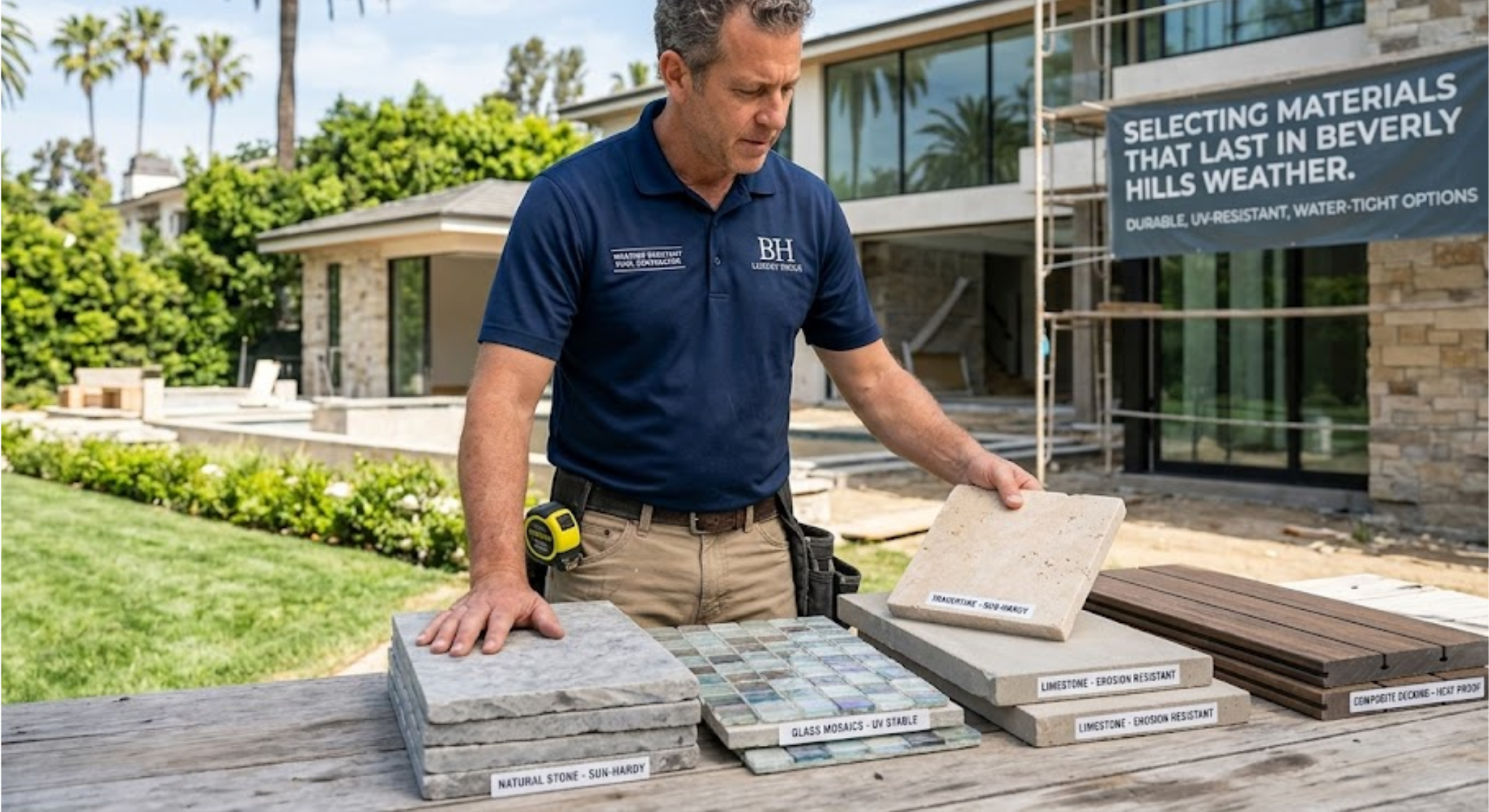
When you envision a luxury estate in Southern California, a pristine, flawlessly designed swimming pool is invariably part of the picture. However, constructing a backyard oasis in this exclusive enclave requires much more than just a beautiful blueprint. The local environment presents specific challenges that dictate how a pool is built and what materials are utilized. Creating a custom pool in Beverly Hills often starts with understanding the local terrain, climate, and design expectations unique to the area.
From intense, year-round ultraviolet (UV) exposure to occasional seismic activity and fluctuating evening temperatures, your pool’s materials must be engineered for elite resilience. Working with experienced Pool Contractors Beverly Hills ensures that every stone, tile, and plaster finish is selected not just for its opulent aesthetic, but for its long-term durability. Here is a comprehensive guide on how to choose the best, weather-resistant materials for your Beverly Hills pool project.
1. The Beverly Hills Climate Factor
While the weather in Beverly Hills is famously idyllic, it is also demanding on exterior architectural elements. The relentless Southern California sun acts as a natural bleaching agent, rapidly fading inferior materials. Furthermore, the microclimate can shift rapidly; bright, hot afternoons frequently give way to cool, damp marine layers in the evening.
These continuous cycles of thermal expansion and contraction can wreak havoc on cheap masonry and standard pool finishes. To prevent cracking, fading, and structural degradation, every material chosen from the submerged interior finish to the sprawling patio deck must possess high thermal tolerance and superior UV resistance.
2. Premium Pool Surface Finishes
The interior surface of your pool is constantly exposed to chemically treated water and direct sunlight. While traditional white marcite plaster was once the industry standard, it is highly susceptible to chemical etching and has a relatively short lifespan. For a luxury build that lasts, advanced aggregate blends are the preferred choice.
| Material Type | Lifespan | Visual Aesthetic | Weather & Chemical Resistance |
|---|---|---|---|
| Standard Plaster | 5 – 7 Years | Classic, matte white or light blue. | Low; susceptible to etching, staining, and UV fading. |
| Quartz Aggregate | 10 – 15 Years | Sparkling, highly customizable colors. | High; the quartz crystals resist chemical breakdown and fading. |
| Pebble Aggregate | 15 – 20+ Years | Natural, lagoon-like, textured depth. | Exceptional; nearly impervious to chemical wear and thermal stress. |
By upgrading to a premium pebble or quartz finish, you ensure your pool’s interior maintains its vibrant, resort-like coloration for decades, regardless of the intense California sun.
3. Decking and Coping That Beats the Heat
The pool deck (hardscaping) and coping (the architectural edge around the pool’s perimeter) are where bare feet meet the stone. In Beverly Hills, summer temperatures frequently soar, turning standard concrete or dark brick into an uncomfortably hot surface. Choosing the right decking material is essential for both longevity and comfort.
- Natural Travertine: This luxurious natural stone is incredibly popular in high-end builds because it remains naturally cool to the touch, even in direct sunlight. It is highly porous (meaning it absorbs water quickly to prevent slipping) and handles thermal expansion beautifully without cracking.
- Porcelain Pavers: High-density porcelain is rapidly becoming a favorite for modern, minimalist designs. It is virtually non-porous, making it completely resistant to chemical stains, salt water, and UV fading.
- Limestone: Offering a sleek, sophisticated Mediterranean aesthetic, limestone is dense, durable, and handles the Southern California climate effortlessly while reflecting heat away from the surface.
4. Tile Choices for the Waterline
The waterline tile is a critical component of your pool’s design. It acts as a protective barrier, preventing sunscreen, body oils, and hard water minerals from creating a permanent “scum line” along the plaster. Because this tile sits right at the surface, it is subjected to constant wet-and-dry cycles and baking sun.
- Glass Mosaic Tile: For maximum durability and striking visual appeal, glass tile is unmatched. It is completely non-porous, meaning it will never absorb water or pool chemicals. It resists frost, fading, and chemical degradation, all while reflecting the bright California sun to create a mesmerizing, sparkling perimeter.
- Glazed Porcelain Tile: A highly durable, cost-effective alternative to glass. Glazed porcelain resists water absorption and offers exceptional longevity, available in countless textures and patterns to match any estate’s architectural style.
5. Structural Integrity and Seismic Considerations
Beyond the visible aesthetics, the hidden structural shell of your pool must be engineered for the realities of Southern California’s geology. Beverly Hills properties often feature hillside terracing, and the entire region is subject to seismic activity.
A top-tier pool contractor will exclusively utilize pneumatically applied concrete either shotcrete or gunite heavily reinforced with a dense grid of steel rebar. This monolithic, single-pour structure is incredibly strong yet offers just enough tensile flexibility to withstand minor seismic shifts without catastrophic cracking. Furthermore, specialized retaining walls and advanced drainage systems must be integrated into the hillside to prevent soil erosion and hydrostatic pressure from damaging the pool shell during heavy winter rainstorms.
Conclusion
Building a luxury swimming pool in Beverly Hills is a significant architectural endeavor that seamlessly blends opulent design with heavy-duty structural engineering. By intentionally selecting materials that can easily withstand intense UV radiation, continuous thermal shifts, and the region’s unique geological demands, you protect your capital investment. Whether you are installing cool-touch travertine decking, vibrant glass waterline tiles, or a structurally fortified shotcrete shell, quality is paramount. Partner with elite, local pool contractors who possess a deep understanding of the area’s climate and terrain to ensure your custom backyard oasis remains a breathtaking, flawless retreat for generations to come.
Frequently Asked Questions (FAQ)
Q: Are saltwater pools safe for natural stone decking in Beverly Hills?
A: Yes, but the stone must be properly sealed. Saltwater systems are very popular for their gentle feel, but salt can be corrosive to natural stone over time. Utilizing highly dense materials like porcelain pavers, or professionally sealing softer stones like travertine every few years, will protect the hardscaping from salt degradation.
Q: Why is standard white plaster not recommended for luxury pool builds?
A: Standard plaster is a soft mixture of cement and crushed marble. Under the intense California sun and continuous exposure to pool chemicals, it easily stains, chalks, and breaks down, typically requiring a full resurfacing within 5 to 7 years. Aggregate finishes provide far superior longevity.
Q: Can dark pool finishes fade in the Southern California sun?
A: If the dark finish relies on cheap organic dyes mixed into standard plaster, it will fade significantly. However, if you choose a dark premium pebble or quartz aggregate, the color is derived from the natural stones or ceramic-coated crystals themselves, meaning it will maintain its rich, dark hue indefinitely without bleaching.