

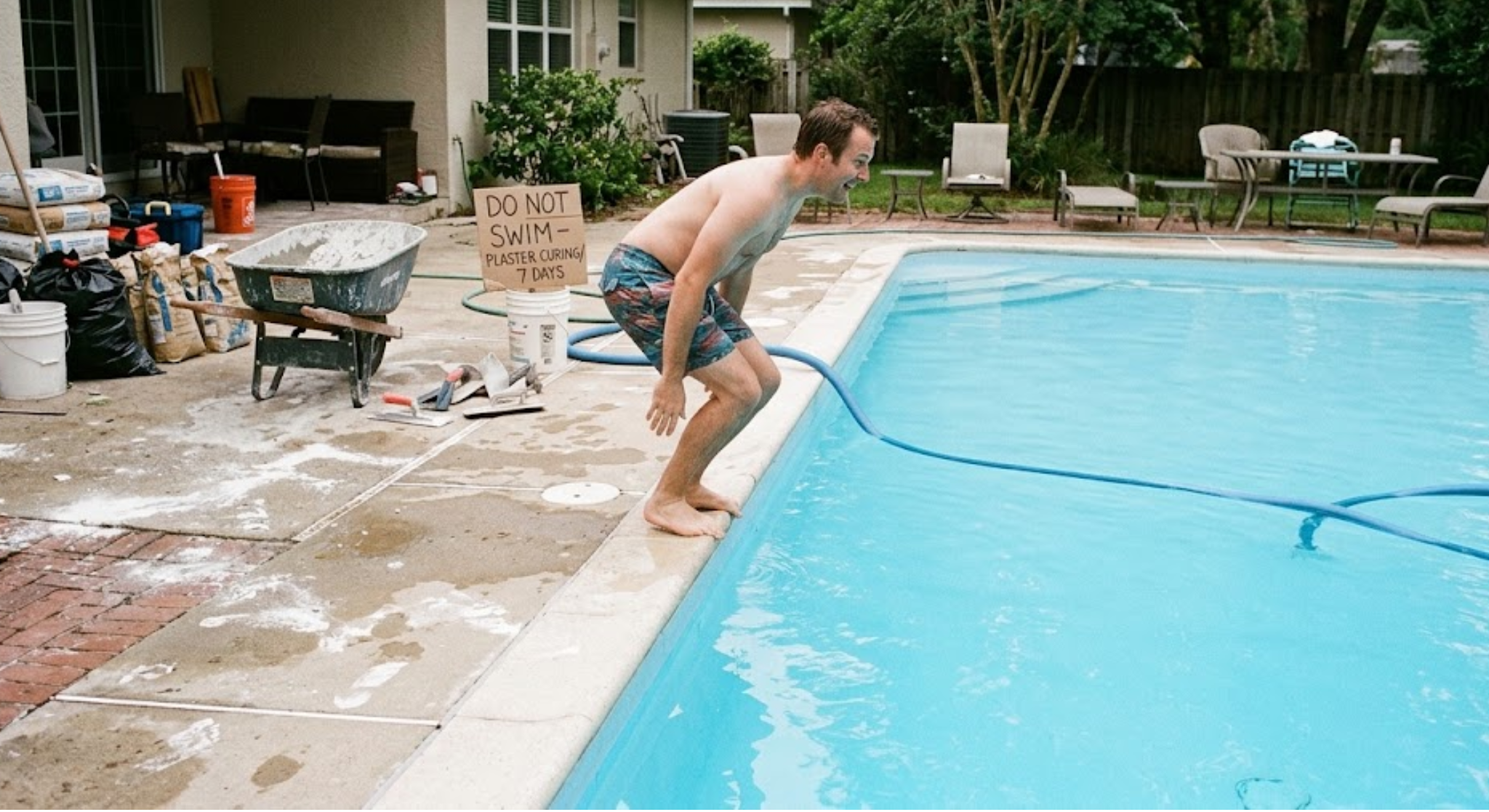
Completing a pool replastering project is an exciting milestone for any Austin homeowner. Watching your outdoor oasis transform from worn, rough concrete into a pristine, brilliant blue retreat makes you want to jump right in and cool off.
However, resist the urge to dive in immediately. The period following fresh plaster application is critical to the long-term structural integrity and aesthetic beauty of your pool’s interior surface.
Fresh pool plaster is not simply paint that dries; it is a delicate mixture of Portland cement, aggregate, and additives that cures under water through a continuous chemical process. Jumping in too soon can damage the fragile surface, stain the curing finish, and introduce contaminants before the water chemistry reaches equilibrium.
Here is an essential guide from the team at Pool Plastering Austin explaining why waiting is necessary, what happens during the initial curing phase, and how proper post-plaster care protects your investment.
1. The Curing Timeline: Why the 5 to 7 Day Wait Matters
When fresh plaster is applied, it requires water pressure and controlled hydration to cure properly. The first 28 days are vital for hydraulic curing, with the first week being the most sensitive.
[ Plaster Application ] ──► Continuous Water Fill ──► 5–7 Day Curing & Balancing ──► Safe Swimming
The Initial Curing Milestones:
- Day 1 (Filling the Pool): The pool must be filled continuously without stopping. If the hose is turned off mid-fill, a permanent bathtub ring line can form on the soft plaster.
- Days 1 to 3 (Brushing Phase): As plaster hydrates, it sheds a fine mineral residue called “plaster dust.” The pool must be brushed twice daily to prevent dust from adhering to the surface and causing rough spots.
- Days 5 to 7 (Chemical Stabilization): Water balance parameters including pH, total alkalinity, and calcium hardness are gradually adjusted. Once the water is balanced and sanitized, the pool is safe for swimmers.
2. Risks of Swimming Too Early
Jumping into a freshly plastered pool before the 5-to-7-day mark can cause permanent surface damage and safety hazards.
┌─────────────────────────────────────────────────────────────────────────────┐
│                       EARLY SWIMMING RISKS & IMPACT                         │
├──────────────────────────────┬──────────────────────────────────────────────┤
│ Hazard / Event               │ Impact on Fresh Plaster Finish               │
├──────────────────────────────┼──────────────────────────────────────────────┤
│ **Footprints & Pressure Marks**│ Soft plaster can indent under foot pressure,│
│                              │ leaving permanent heel marks and impressions.│
├──────────────────────────────┼──────────────────────────────────────────────┤
│ **Chemical Burn & Irritation**│ Unbalanced water with high pH/alkalinity     │
│                              │ can irritate eyes and sensitive skin.        │
├──────────────────────────────┼──────────────────────────────────────────────┤
│ **Staining & Organic Oils**  │ Sunscreens, body oils, and dirt track in     │
│                              │ contaminants that stain uncured plaster.     │
└──────────────────────────────┴──────────────────────────────────────────────┘
Exercising patience during the first week ensures the plaster cures into a dense, smooth, and stain-resistant surface that lasts for decades.
3. The Critical “Start-Up” Routine: 10 to 14 Day Care
The secret to a smooth, long-lasting plaster finish lies in disciplined daily maintenance immediately after filling the pool.
[ Twice-Daily Brushing ] ──► Regular Filtration Running ──► Gradual Chemical Dosing
- Twice-Daily Surface Brushing: Brush the walls and floor thoroughly twice a day for the first 10 to 14 days. This removes plaster dust and smoothes the surface texture.
- Continuous Pump Filtration: Run the filtration pump continuously for the first 72 hours (or until plaster dust clears) to filter out suspended particles.
- Delay Automatic Cleaners and Heaters: Do not use automatic pool vacuums, wheeled cleaners, or pool heaters for the first 14 days. Wheeled cleaners can leave track marks on soft plaster, while high heater temperatures alter chemical curing.
4. Balancing Water Chemistry Post-Plastering
Fresh plaster naturally leaches calcium hydroxide into the water, causing pH and total alkalinity to spike rapidly during the first two weeks. Maintaining chemical control prevents scaling and etching.
| Water Parameter | Target Range for Fresh Plaster | Adjustment Strategy |
| pH Level | $7.2 – 7.6$ | Add muriatic acid in small diluted doses to lower high pH. |
| Total Alkalinity (TA) | $80 – 100\text{ ppm}$ | Keeps pH stable and prevents rapid chemical swings. |
| Calcium Hardness | $200 – 300\text{ ppm}$ | Prevents water from pulling calcium directly from fresh plaster. |
| Free Chlorine | $1.0 – 3.0\text{ ppm}$ | Added gradually after pH and alkalinity are controlled. |
Avoid adding harsh shock treatments or salt (for salt-water systems) during the initial 28-day cure, as high salt levels ruin curing plaster.
5. Protecting Your Investment with Professional Expertise
Replastering a pool is a significant home improvement that adds value, beauty, and safety to your property. Working with experienced local plastering professionals ensures high-quality material application and clear, step-by-step start-up instructions tailored to Austin’s water conditions.
Following your contractor’s start-up protocol guarantees your new plaster finish remains vibrant, smooth, and durable for 15 to 20 years.
Conclusion
While waiting to swim after pool replastering requires a little patience, the 5-to-7-day curing window is essential to securing a smooth, durable, and flawless finish. By adhering to a twice-daily brushing routine, carefully balancing water chemistry, and keeping equipment off soft plaster, you protect your investment and ensure your pool remains stunning for years to come.
Ready to revitalize your pool surface or need expert advice on post-plaster maintenance? Connect with the specialists at Clear Solutions Pool Plastering to schedule your consultation today.
Frequently Asked Questions (FAQ)
Q: Why does the pool water look cloudy after fresh plastering?
A: Cloudiness is caused by “plaster dust,” a natural byproduct of the chemical curing process. Continuous pump filtration and daily brushing clear the water within a few days.
Q: When can I turn on my salt chlorine generator after replastering?
A: You must wait at least 28 days before adding salt to a freshly plastered pool. Adding salt too early damages curing plaster and causes pitting.
Q: Can I use an automatic pool cleaner during the first week?
A: No. Automatic wheeled vacuums and robotic cleaners should not be used for the first 14 days, as their wheels can leave permanent tracks on soft plaster.