

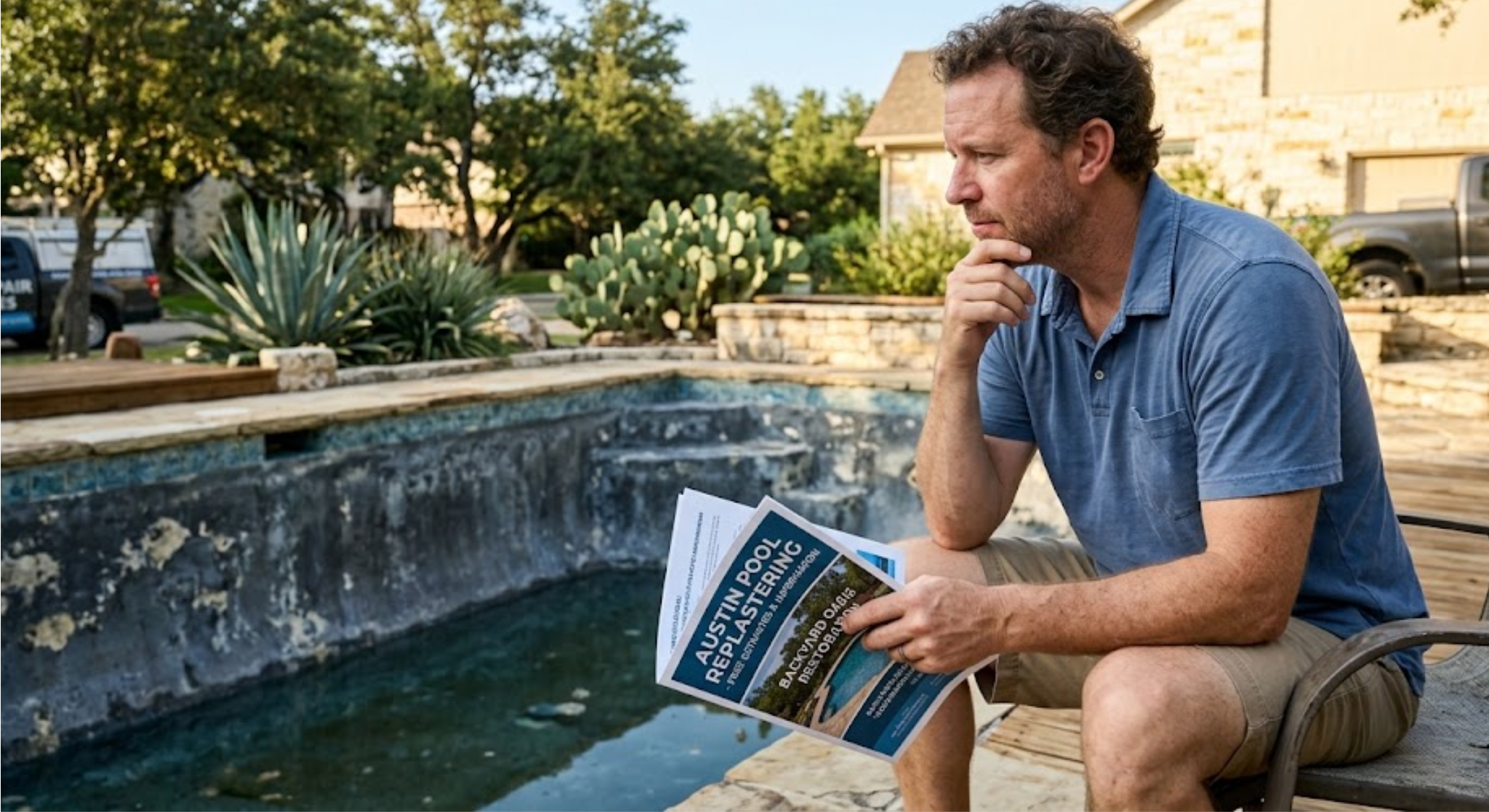
Owning a swimming pool in Greater Austin is one of the hallmarks of Central Texas living. From long, sun-soaked summer afternoons to evening gatherings on the patio, a backyard pool serves as a central oasis for relaxation, exercise, and family entertainment. However, years of continuous exposure to harsh UV radiation, high summer water temperatures, chemical treatments, and hard municipal water eventually take a toll on the interior plaster finish.
When pool plaster begins to show signs of surface etching, rough texture, stubborn staining, or delamination, replastering becomes necessary to restore structural integrity and aesthetic appeal.
While most homeowners begin thinking about pool repairs when warm weather arrives, waiting until late spring or summer to schedule a replastering project can lead to long contractor waiting lists, higher project costs, and delayed swimming seasons. Selecting the right season and climate window for your pool transformation is essential for a smooth, stress-free experience.
Here is a comprehensive guide on how to pick the right time for your pool replastering project, evaluate seasonal weather advantages, and prepare your backyard for a flawless finish.
1. Why Weather and Ambient Temperature Dictate Plaster Quality
Pool plastering is a delicate chemical process. Hydraulic cement mixes require precise hydration and temperature conditions to cure correctly. Applying plaster in extreme heat or freezing weather can compromise the chemical bonding process, leading to premature cracking, shrinkage, or surface weakness.
[ Extreme Summer Heat (95°F+) ] ──► Rapid Surface Drying ──► Shrinkage Cracks & Weak Bonding

[ Moderate Fall/Spring (50°F–75°F) ] ──► Slow, Even Hydration ──► Maximum Substrate Durability
The Ideal Curing Temperature Zone:
- Optimal Temperature Range ($50^\circ\text{F} – 80^\circ\text{F}$): Plaster cures best when ambient air temperatures remain consistently between $50^\circ\text{F}$ and $80^\circ\text{F}$. Moderate temperatures allow the cement to hydrate slowly and evenly underwater.
- The Risk of Extreme Summer Heat ($95^\circ\text{F}+$): In the middle of an Austin July, high heat causes moisture in fresh plaster to evaporate too quickly during troweling. Rapid water loss causes hairline shrinkage cracks (crazing) and weakens overall surface adhesion.
- Freezing Hazards ($< 35^\circ\text{F}$): Freezing winter temperatures prevent cement from curing and can expand trapped moisture within fresh plaster, causing surface scaling or delamination.
2. Comparing Seasons: Fall, Winter, Spring, and Summer
Evaluating the pros and cons of each season helps you identify the best project window for your schedule and budget.
┌─────────────────────────────────────────────────────────────────────────────┐
│                    SEASONAL POOL REPLASTERING COMPARISON                    │
├──────────────────────────────┬──────────────────────────────────────────────┤
│ Season                       │ Operational Advantages & Curing Environment  │
├──────────────────────────────┼──────────────────────────────────────────────┤
│ **Autumn (Sept – Nov)**      │ **Best Season overall.** Mild ambient temperatures,│
│                              │ ideal curing rates, and fast contractor availability.│
├──────────────────────────────┼──────────────────────────────────────────────┤
│ **Winter (Dec – Feb)**       │ Low seasonal demand; excellent project scheduling│
│                              │ provided weather stays above freezing ($40^\circ\text{F}+$).│
├──────────────────────────────┼──────────────────────────────────────────────┤
│ **Spring (March – May)**     │ High homeowner demand creates longer waitlists;│
│                              │ weather is favorable but schedules fill rapidly.│
├──────────────────────────────┼──────────────────────────────────────────────┤
│ **Summer (June – Aug)**      │ Worst window. High heat risks curing defects and │
│                              │ causes lost swimming days during peak heat.  │
└──────────────────────────────┴──────────────────────────────────────────────┘
Partnering with local specialists in Austin Pool Replastering during off-peak autumn or early spring months guarantees focused service and ideal curing conditions.
3. Unlocking Off-Season Strategic Advantages
Choosing to replaster your pool during the off-season typically between October and March delivers major practical benefits beyond superior chemical curing.
[ Off-Season Scheduling ] ──► Zero Lost Swimming Days ──► Complete Spring Readiness
- Avoid Lost Swimming Time: Draining and replastering a pool during May or June means sacrificing prime swimming weather while waiting for construction and the mandatory 28-day water-curing period to complete.
- Faster Project Timelines: During peak spring and summer months, pool contractors manage packed schedules. Off-season projects experience fewer scheduling conflicts, allowing crews to complete surface prep, plaster application, and fill-up quickly.
- Flexibility for Additional Upgrades: Replastering in the off-season provides ample time to incorporate secondary enhancements such as replacing tile lines, upgrading deck coping, or installing energy-efficient variable-speed pumps without rushing prior to summer.
4. Understanding the 28-Day Curing Window Before Summer Hits
Replastering does not end the moment new material is troweled onto the pool shell. Once fresh plaster is applied and the pool is refilled with water, it enters a critical 28-day start-up curing window.
| Curing Phase | Required Action & Environmental Factor |
| Days 1 – 7 | Brush pool walls twice daily to suspend un-hydrated plaster dust; manage initial pH closely. |
| Days 8 – 14 | Gradually balance total alkalinity, calcium hardness, and cyanuric acid levels. |
| Days 15 – 28 | Maintain balanced LSI water chemistry; keep automated cleaners and heaters turned off. |
Completing this 28-day start-up process during cool off-season weather ensures your pool water chemistry is fully stabilized and ready for heavy swimmer loads long before the first warm heatwave arrives.
5. Recognizing Signs That It Is Time to Schedule Replastering
If you are unsure whether your pool requires immediate attention or can wait another season, inspect your interior surface for these primary indicator signs:
[ Rough / Etched Surface ] ──► Chemical Deterioration ──► Schedule Replastering
- Abrasive Surface Texture: Plaster that feels rough underfoot indicates that years of low pH or imbalanced chemistry have leached calcium out of the cement matrix.
- Delamination and Pop-Offs: Sections of plaster separating or chipping away from the underlying gunite shell signal structural bonding failure.
- Persistent Mineral Staining: Deep copper, iron, or calcium scale stains that resist acid washing indicate that the plaster layer has reached the end of its functional lifespan.
Conclusion
Timing is everything when it comes to pool replastering. By avoiding extreme summer heat and scheduling your renovation project during the mild off-season months of fall or early spring, you ensure ideal curing conditions, faster contractor response times, and a perfectly balanced pool ready for summer enjoyment.
Ready to restore your pool’s surface with expert craftsmanship and reliable service? Connect with the experienced team at Clear Solutions Pool Plastering to schedule your site evaluation and custom replastering consultation today.
Frequently Asked Questions (FAQ)
Q: Can pool replastering be completed during the winter in Austin, TX?
A: Yes. Central Texas winters are generally mild, making winter an excellent time for replastering. Work is simply scheduled around short cold snaps to ensure temperatures stay comfortably above freezing ($40^\circ\text{F}+$) during application.
Q: How long does a pool replastering project take from start to finish?
A: The physical construction process including draining, chip-out surface prep, bond coat application, and plastering typically takes 3 to 7 business days, followed by the 28-day water curing period.
Q: How many years does a new pool plaster finish last?
A: Standard smooth plaster finishes typically last 7 to 10 years, while advanced quartz and pebble aggregate finishes offer superior durability, lasting 12 to 20+ years with proper water chemistry balance.