

Removing a tree from your property does not always mean the job is completely finished. Once the trunk has been cut down, the remaining stump can create an obstacle in your yard, affect landscaping plans, and potentially become a source of future problems. Homeowners generally have two main options for dealing with a stump: stump removal and stump grinding.
Although these terms are sometimes used interchangeably, they involve very different processes. Understanding the difference can help you choose the right solution based on your landscaping plans, budget, property conditions, and long-term goals.
What Is Stump Grinding?
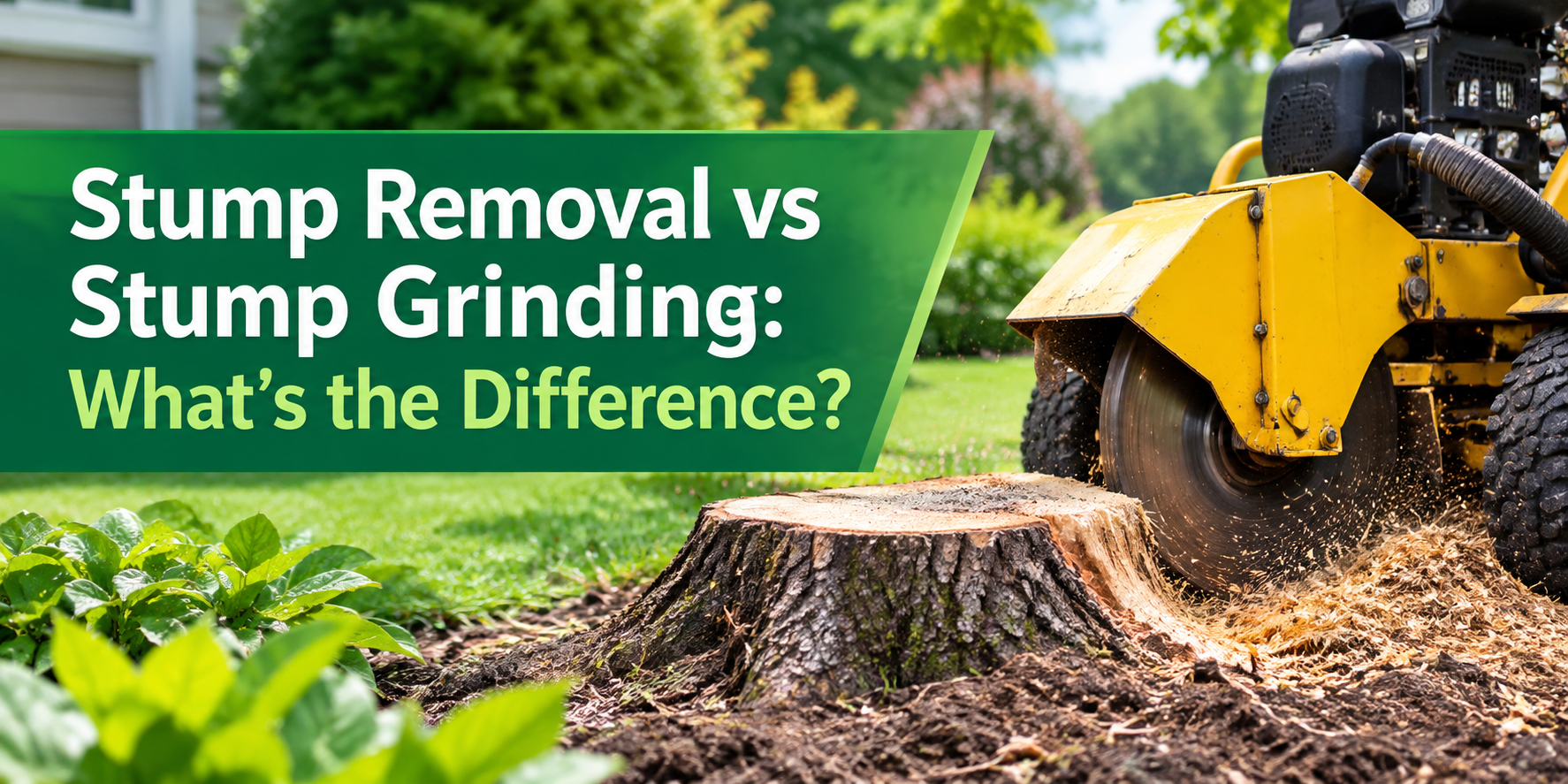
Stump grinding is a process that uses specialized equipment to mechanically grind a tree stump into small wood chips. A professional operates a stump grinder over the remaining stump, gradually cutting it down below the surrounding soil level.
How Stump Grinding Works
The grinding machine uses a rotating cutting wheel to break apart the stump. Depending on the situation, the stump can usually be ground several inches below ground level. The resulting wood chips can then be removed, spread over the area, or sometimes used as mulch.
One major advantage of stump grinding is that it does not require the entire root system to be excavated. The roots remain underground and naturally decompose over time.
Benefits of Stump Grinding
Stump grinding can be useful when homeowners want to improve the appearance of their yard without extensive excavation. It can also be a practical option when a stump is located close to structures, fences, sidewalks, or established landscaping.
Other potential benefits include:
- Less disruption to the surrounding landscape
- Faster completion compared with extensive root excavation
- Reduced physical disturbance to the yard
- More space for mowing and general lawn maintenance
- Improved appearance after the stump is removed below ground level
What Is Stump Removal?
Stump removal involves physically extracting the stump from the ground. This process generally requires digging around the stump and cutting or removing the larger roots connected to it. Depending on the stump’s size and root structure, heavy equipment may be needed.
How Stump Removal Works
Professionals typically expose the stump and major roots before cutting through the root system. The stump can then be pulled or lifted from the ground. The resulting hole is filled with soil or another appropriate material.
Because the roots are also addressed, stump removal can require significantly more labor and create more disturbance to the surrounding landscape.
Benefits of Stump Removal
Stump removal may be appropriate when you need the entire stump and major root structure out of the ground.
Stump removal clears roots completely freeing space for new landscaping. Choosing stump removal can therefore make sense when you want to replant, install a structure, expand a garden bed, or make substantial changes to the area.
Key Differences Between Stump Grinding and Removal
The biggest difference is what happens to the roots.
With stump grinding, the visible stump is ground down while most of the underground root system remains in place. With stump removal, the stump and larger connected roots are physically extracted.
Depth and Root Removal
Stump grinding typically focuses on the portion of the stump above and slightly below the soil surface. The roots remain underground.
Stump removal goes much further because the objective is to physically remove the stump and significant portions of its root system.
Yard Disturbance
Grinding generally causes less disruption because there is no need to excavate a large area around the stump. Removal can leave a substantial hole and may disturb nearby grass, plants, soil, and landscaping.
Time and Labor
Grinding is often a relatively straightforward process for professionals with the appropriate equipment. Full removal can require more digging, cutting, equipment, and cleanup, particularly for large or deeply rooted trees.
Future Landscaping
Your plans for the property should play a major role in the decision. If you simply want the stump out of sight and need usable lawn space, grinding may be sufficient. If you plan to build, plant a new tree in the same location, or make significant changes to the area, complete removal may be more suitable.
Which Option Is Right for Your Property?
There is no single solution that works for every stump. The right choice depends on the location and your plans for the property.
Choose Grinding When Appearance Is the Main Concern
If the primary goal is to eliminate the visible stump and make mowing easier, grinding may provide a practical solution. It can leave the surrounding landscape relatively intact while creating a more usable surface.
Consider Removal for Major Landscaping Projects
If you need the area completely cleared for construction, planting, or landscaping, removing the stump and major roots may be preferable. This gives you more freedom to work with the soil and redesign the space.
Consider the Stump’s Location
A stump close to a foundation, retaining wall, utility line, fence, or paved surface requires careful consideration. Professional assessment can help determine which approach is appropriate without unnecessarily damaging surrounding features.
What Happens After Stump Grinding or Removal?
The work does not necessarily end when the stump is gone. The remaining area may need cleanup and restoration.
After grinding, the resulting wood chips may need to be removed or incorporated into the landscape appropriately. Soil can then be added to bring the area to the desired grade before grass or other plants are established.
After complete removal, the hole left behind needs to be filled and compacted properly. The area can then be prepared for new landscaping, grass, or another planned use.
Why Professional Stump Services Matter
Stumps can be surprisingly difficult to deal with, especially when they have extensive roots or are located near structures. Professional equipment can make the process more efficient while reducing the risk of unnecessary property damage.
Professionals can also evaluate the stump, surrounding landscape, access conditions, and your future plans before recommending an approach. This can help ensure that the work addresses the actual problem rather than simply treating the visible portion of the stump.
FAQs
Is stump grinding better than stump removal?
Neither option is universally better. Grinding may be suitable when you want the visible stump eliminated with minimal landscape disruption. Removal may be more appropriate when you need the stump and major roots physically cleared from the ground.
Does stump grinding remove the roots?
No. Stump grinding primarily removes the visible stump and part of the stump below ground level. Most of the root system remains underground and can gradually decay.
Does stump removal remove all roots?
Complete removal addresses the stump and larger connected roots, but extremely fine roots can extend throughout the surrounding soil and may not all be physically extracted.
Can I plant a new tree after stump removal?
It may be possible, but the location and condition of the soil should be considered. A professional can help determine whether the old stump location is suitable for new planting or whether another area would be better.
How long does stump grinding take?
The time depends on the stump’s size, wood condition, location, accessibility, and the equipment being used. Smaller stumps can often be processed much more quickly than large, deeply rooted ones.
What should I do with stump grinding chips?
The chips can potentially be used as mulch in appropriate landscaping areas, removed from the property, or incorporated into the landscape depending on the situation. A professional can advise on the best option.
Conclusion
Understanding the difference between stump removal and stump grinding makes it easier to choose an approach that fits your property. Stump grinding focuses on eliminating the visible stump while leaving most roots underground, making it useful when you want less disruption to your landscape. Stump removal involves more extensive excavation and addresses the stump and larger roots when complete clearance is needed.
Before choosing a method, consider your landscaping plans, the stump’s location, the condition of the surrounding area, and how much soil disturbance you are willing to accept. A professional stump service can assess these factors and help determine the appropriate solution for your property.