

A roof is one of the most important parts of any home or commercial building. It protects the property from rain, wind, heat, and other weather conditions while helping maintain indoor comfort. However, even a well-installed roof can develop problems over time. Small leaks, damaged shingles, poor drainage, and flashing issues can become expensive repairs if they are ignored.
Regular roof inspections are an effective way to identify potential problems before they become serious. Whether your roof is relatively new or several years old, knowing what to look for during an inspection can help protect your investment. These Covington roofing company tips can help property owners understand the inspection process and recognize areas that deserve attention.
Why Regular Roof Inspections Matter
Roof damage is not always easy to see from the ground. A few missing shingles may be noticeable, but problems such as deteriorating flashing, hidden moisture, or early signs of structural damage can go undetected.
Regular inspections provide an opportunity to identify these concerns early. Professional inspections can also help property owners understand the overall condition of their roofing system and determine when maintenance or repairs may be necessary.
Protecting Your Property
A damaged roof can allow water to enter the structure. Once moisture gets beneath roofing materials, it can contribute to wood deterioration, mold growth, insulation problems, and interior damage.
Early detection gives homeowners an opportunity to address these problems before they spread. This can potentially reduce repair costs and help extend the useful life of the roof.
Improving Roof Longevity
Routine inspections can reveal areas that require maintenance. Replacing damaged shingles, clearing blocked drainage systems, or repairing flashing can help prevent larger problems.
Regular maintenance is particularly important for roofs exposed to severe weather. Strong winds, heavy rain, and temperature changes can gradually weaken roofing materials.
Covington Roofing Company Tips for a Thorough Inspection
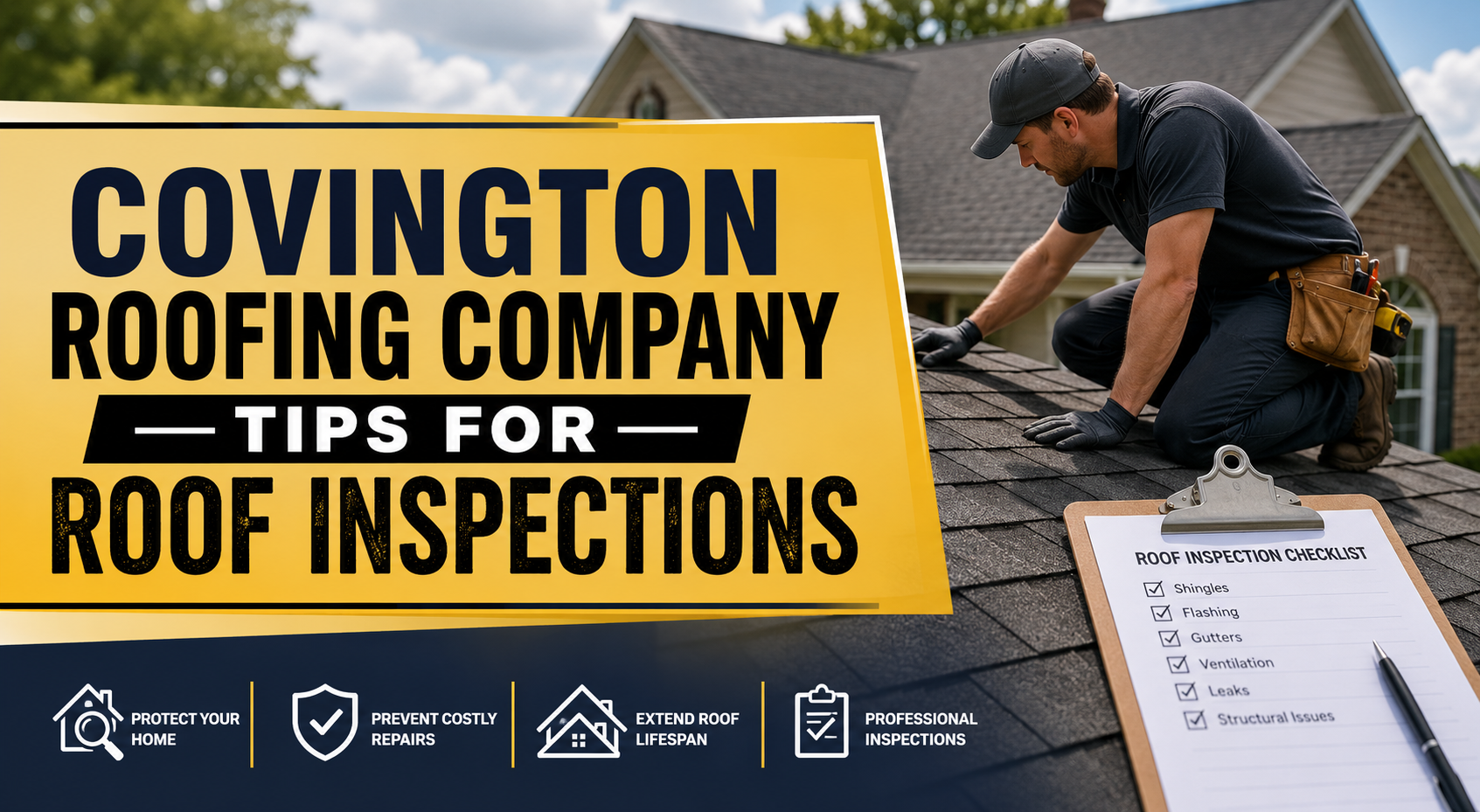
Homeowners can perform basic visual checks, but professional inspections provide a more comprehensive assessment. When inspecting a roof, several areas deserve particular attention.
Check Shingles and Roofing Materials
Look for cracked, curled, loose, or missing shingles. Granules collecting in gutters can also indicate that asphalt shingles are wearing down.
Other roofing systems have their own warning signs. Metal roofing may develop corrosion or loose fasteners, while other materials can experience cracking, separation, or surface deterioration.
Examine Flashing
Flashing is installed around areas where the roof meets walls, chimneys, vents, skylights, and other structures. These locations are especially vulnerable to water intrusion.
Damaged, loose, or deteriorated flashing can create openings where water enters the building. During an inspection, these areas should be checked carefully.
Inspect Gutters and Downspouts
Roof drainage is another important part of an inspection. Gutters and downspouts should be free of excessive debris and able to move water away from the building.
Standing water around the roof or clogged gutters can contribute to moisture problems. Make sure downspouts direct water far enough away from the foundation to reduce potential drainage issues.
Look for Signs of Leaks
Interior areas can provide useful clues about roof problems. Check ceilings, attics, and upper walls for water stains, discoloration, damp insulation, or unusual odors.
A visible stain does not always indicate that the leak is directly above it. Water can travel along roofing components or framing before appearing inside the building.
When Should You Schedule a Roof Inspection?
The best inspection schedule depends on the roof’s age, condition, materials, and exposure to weather. Many property owners benefit from having their roof professionally inspected at least periodically, even when there are no obvious problems.
An inspection is especially important after severe weather. High winds, hail, and heavy rainfall can cause damage that may not be immediately visible.
You should also consider an inspection when buying or selling a property, before major roofing work, or when the roof is approaching the expected end of its service life.
Why Professional Inspections Are Valuable
Regular inspections identify issues early. Working with a trusted covington roofing company can help property owners understand the condition of their roofing system and determine whether maintenance, repairs, or replacement should be considered.
Professional roofers have experience identifying problems that may be difficult for an untrained person to recognize. They can evaluate roofing materials, flashing, drainage components, ventilation, and other parts of the system.
A professional inspection can also provide useful documentation about the roof’s condition. This information may help homeowners plan future maintenance and prioritize necessary repairs.
Common Warning Signs You Should Not Ignore
Certain signs should prompt a closer look at the roof. These include:
- Missing or damaged shingles
- Water stains on ceilings or walls
- Sagging areas on the roof
- Damaged flashing
- Excessive granules in gutters
- Moss or algae growth
- Clogged gutters
- Visible daylight through the attic roof structure
- Persistent damp or musty odors
- Unexpected increases in moisture inside the property
One warning sign does not necessarily mean the entire roof needs replacement. A professional evaluation can help determine the actual cause and appropriate solution.
How to Prepare for a Roof Inspection
Before an inspection, homeowners can make the process easier by clearing access to the attic and noting any concerns they have noticed. For example, mention recent leaks, unusual sounds during storms, or areas where water appears to collect.
It is also helpful to provide information about previous repairs and the approximate age of the roof. These details can give the roofing professional additional context when evaluating the system.
Conclusion
Roof inspections are an important part of responsible property maintenance. They can uncover small problems before they develop into major damage, help extend the life of roofing materials, and give homeowners greater confidence in the condition of their property.
By checking roofing materials, flashing, drainage systems, attic areas, and signs of moisture, property owners can stay ahead of potential problems. Professional inspections are particularly valuable because experienced roofing contractors can identify issues that may not be obvious during a basic visual check. With regular attention and timely repairs, a well-maintained roof can provide reliable protection for years.
FAQs
How often should a roof be inspected?
The ideal schedule depends on the roof’s age, material, condition, and exposure to severe weather. Periodic professional inspections are recommended, with additional inspections after significant storms.
What does a roof inspection include?
A typical inspection may evaluate shingles or other roofing materials, flashing, gutters, drainage, ventilation, visible structural concerns, and signs of water intrusion.
Can I inspect my roof myself?
You can perform a ground-level visual inspection, but climbing onto a roof can be dangerous. Professional roofers have the equipment and experience needed to evaluate difficult-to-access areas safely.
What are the most common signs of roof damage?
Common warning signs include missing shingles, leaks, ceiling stains, damaged flashing, sagging areas, clogged gutters, and excessive granules in drainage systems.
Does a roof inspection mean I need a new roof?
No. An inspection does not automatically mean replacement is necessary. Many roofing problems can be addressed through maintenance or targeted repairs. A professional evaluation can help determine the most appropriate option.