

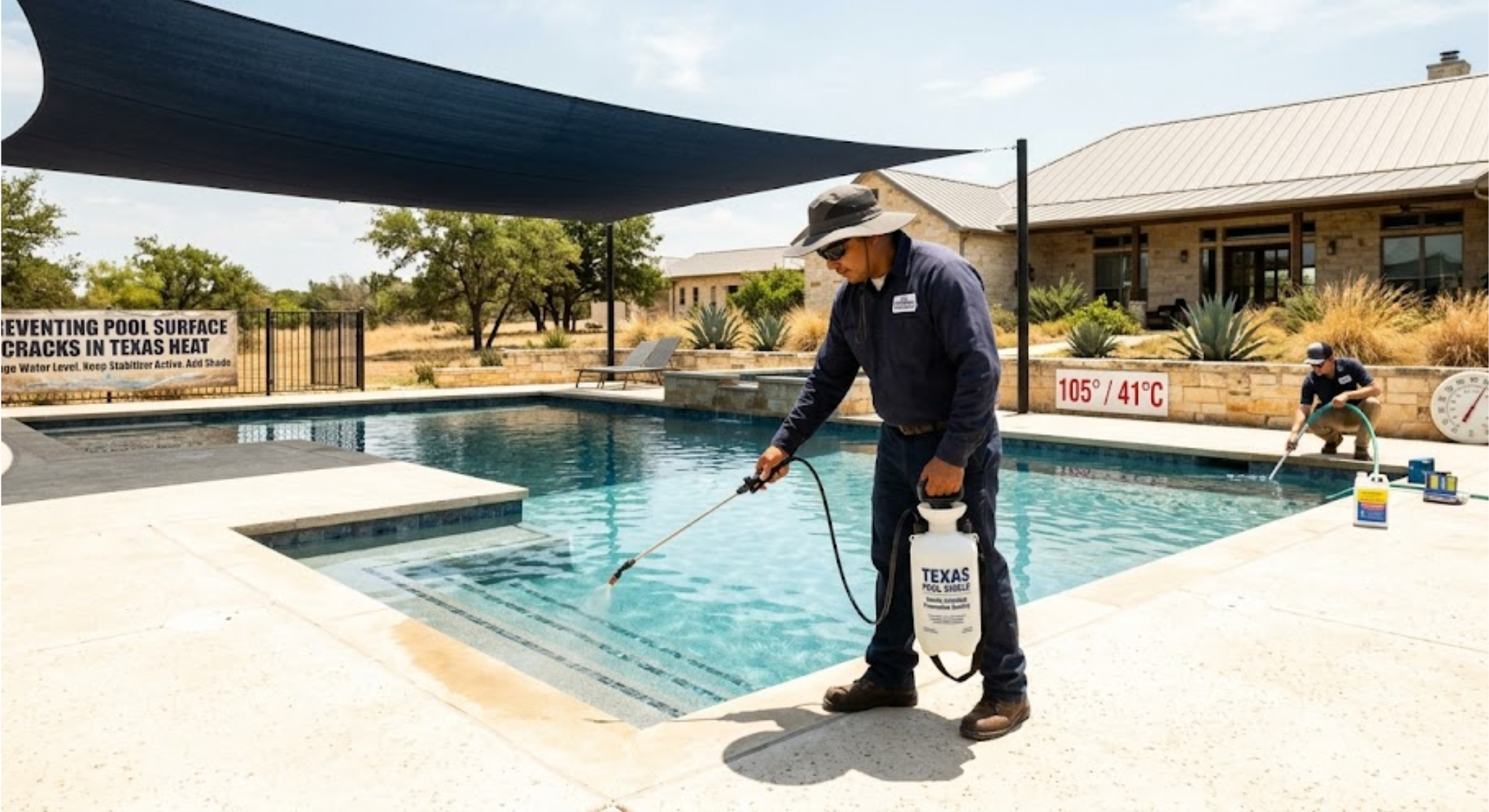
For homeowners in Central Texas, the swimming pool is a vital sanctuary during the triple-digit days of July and August. However, the same intense heat that makes the water so inviting can also be the greatest enemy of your pool’s interior finish. The combination of scorching UV rays, rapid evaporation, and the shifting, expansive clay soils common in the Austin area creates a “perfect storm” for surface damage.
Not all pool plaster companies in Austin understand the toll local weather takes. Pool plaster companies Austin like Clear Solutions use materials and methods specifically designed for the Texas climate. By understanding the science of heat-related damage and implementing proactive protection strategies, you can ensure your pool remains watertight and beautiful for decades.
Why the Texas Heat Causes Cracks
The primary culprit behind surface cracks in Texas is thermal stress. During a typical Austin summer, a pool’s “bond beam” (the top edge of the pool) can reach extreme temperatures, causing the materials to expand. When a sudden afternoon thunderstorm rolls in, the rapid cooling causes those same materials to contract violently. This cycle, known as thermal shock, puts immense pressure on the plaster.
Furthermore, Texas is home to expansive clay soils. These soils act like a sponge: they swell when it rains and shrink during a drought. This constant movement beneath the concrete shell is the leading cause of structural and surface cracks in older, less-resilient pool finishes.
Professional Prevention Strategies
To combat these environmental stressors, premier Austin plastering companies utilize advanced materials that offer more flexibility and durability than traditional white plaster.
| Material Upgrade | Benefit in Texas Heat | Expected Lifespan |
|---|---|---|
| Pebble Aggregates | Naturally resists UV degradation and chemical fluctuations; hides minor movement cracks. | 20+ Years |
| Quartz Finishes | Harder than standard plaster; resists “etching” caused by high water temperatures. | 12–15 Years |
| Glass Bead Blends | Reflects UV rays rather than absorbing them, keeping the surface slightly cooler. | 10–12 Years |
| Polymer Admixtures | Added to the cement mix to increase “flexural strength” and slow down the curing process. | N/A (Add-on) |
Export to Sheets
3 Essential Tips for Homeowners
While a professional installation is the foundation of a crack-free pool, your daily maintenance during a heatwave is equally critical:
- Maintain Consistent Water Levels: In the peak of summer, evaporation can cause water levels to drop below the tile line. If the plaster is exposed to direct sun without the cooling effect of the water, it will dry out, become brittle, and begin to “craze” (develop tiny spiderweb cracks). Keep your water halfway up the skimmer opening at all times.+1
- Balanced Chemistry is Key: High water temperatures accelerate chemical reactions. If your pH or Calcium Hardness is out of balance, the water becomes “aggressive” and will literally leach minerals out of your plaster to balance itself, leading to pitting and cracks.
- Hydrate Your Decking: On 100°F days, occasionally hosing down your pool deck and coping can help lower the ambient temperature around the bond beam, reducing the severity of thermal expansion.
Conclusion
A swimming pool in Austin is a major investment that requires specialized care to survive the local climate. By choosing a plastering company that prioritizes high-performance aggregates and climate-specific admixtures, you build a resilient defense against the Texas sun. With the right materials and a commitment to consistent water levels, you can prevent costly surface failures and keep your backyard oasis pristine for every summer to come.
Frequently Asked Questions (FAQ)
Q: Are small “spiderweb” cracks dangerous?
A: These are often called “crazing.” While usually cosmetic and caused by the plaster drying too quickly during installation or a drop in water levels, they can eventually trap algae and dirt. If they begin to widen or the plaster feels rough, it’s time to consult a professional about resurfacing.
Q: Does a saltwater pool help prevent cracks?
A: Saltwater systems do not directly prevent cracks, but they do provide more consistent sanitization. However, if salt levels aren’t managed, the salt can be harder on the masonry and coping than traditional chlorine.
Q: Can I patch a crack myself?
A: Small DIY underwater patches are available for minor leaks, but they are usually temporary. In the Texas heat, a surface crack is often a symptom of a larger issue. A professional evaluation is the only way to ensure the underlying concrete shell isn’t compromised.