

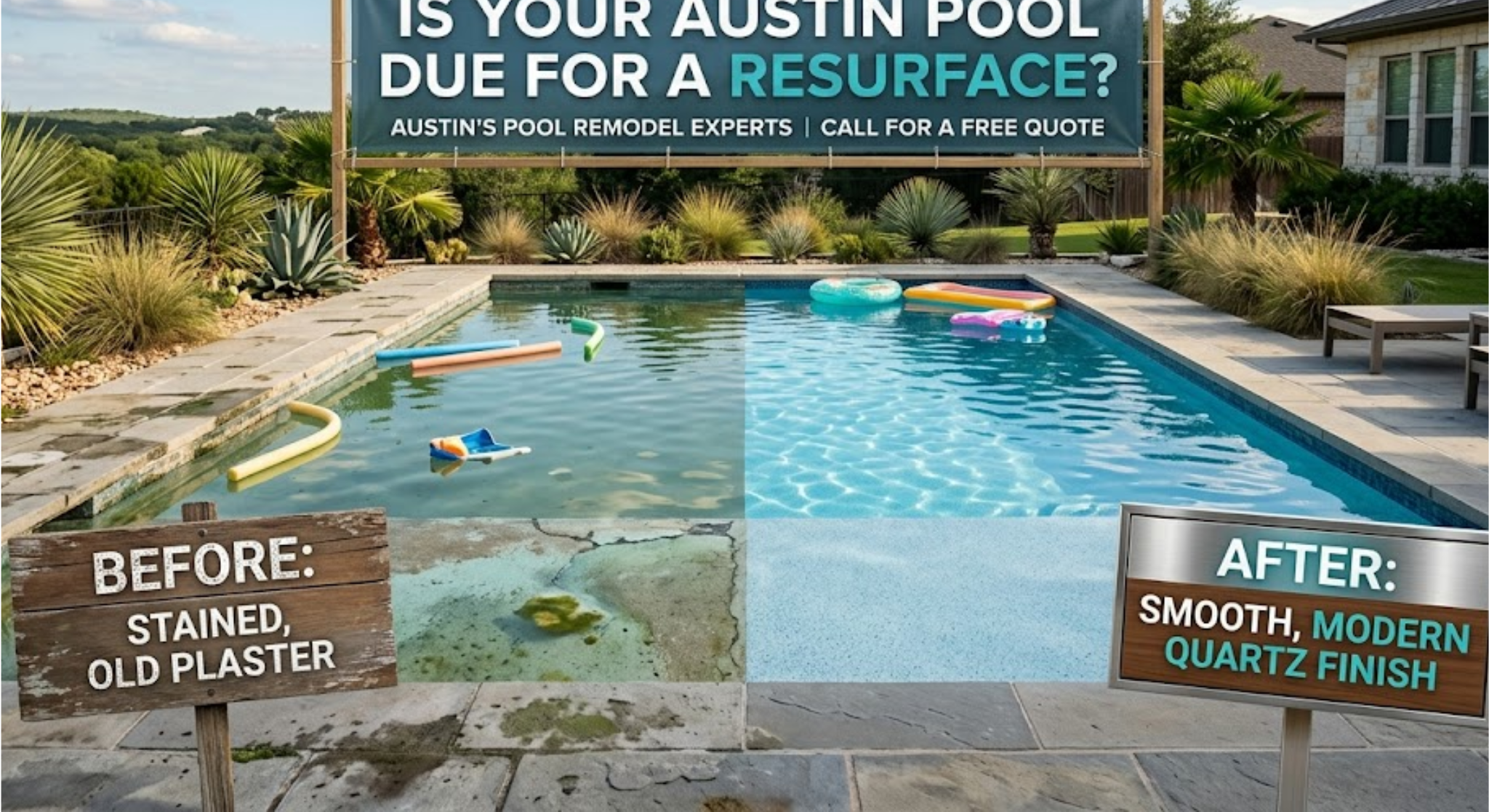
For residents of Central Texas, a backyard pool is a critical refuge from the unrelenting summer heat. However, the same intense climate that makes your pool so essential also accelerates the wear and tear on its interior finish. Between the scorching UV rays, rapid temperature shifts, and the region’s notoriously hard water, even the highest-quality plaster eventually degrades.
If your pool feels rough or has visible wear, it’s likely time for pool resurfacing in Austin, TX. Clear Solutions provides detailed inspections and clear quotes. Understanding the early warning signs of surface failure can save you from costly structural damage and keep your oasis pristine for the next decade.
1. Top Signs Your Pool Needs Resurfacing
Pool plaster doesn’t last forever. Even with immaculate chemical maintenance, a standard white plaster pool in Texas has a lifespan of about 7 to 10 years. Here are the undeniable signs that your surface is failing:
- “Swimmer’s Toe” (Rough Texture): If your kids are coming out of the pool with scraped toes or snagged swimsuits, the plaster has degraded. Acidic water or age causes the smooth cement to dissolve, exposing the sharp aggregate underneath.
- Stubborn, Widespread Stains: While isolated leaves can leave temporary marks, deep, mottled staining (often copper or gray) that cannot be brushed or acid-washed away indicates the plaster has become porous and is absorbing minerals.
- Spalling and Flaking: If you see actual chunks of the surface peeling away at the steps or the floor, water is penetrating behind the plaster layer. This is a severe issue that requires immediate attention to protect the concrete shell.
- Chalky Water: If your water looks consistently cloudy despite balanced chemistry, your plaster may be actively dissolving and shedding dust into the pool.
2. How the Austin Climate Accelerates Wear
The environment in Central Texas creates a unique “stress test” for pool materials. Understanding these factors highlights why a specialized local contractor is necessary.
| Environmental Factor | Impact on Pool Surface |
|---|---|
| Intense UV Radiation | Bakes the exposed bond beam and steps, causing the plaster to dry out, become brittle, and develop “spiderweb” cracks. |
| High Calcium Water | Austin’s municipal and well water is exceptionally hard. This leads to heavy calcium scaling along the waterline that etches into the plaster over time. |
| Thermal Expansion | The rapid shift from 100°F afternoon sun to a cool 70°F thunderstorm causes the pool’s shell to expand and contract, straining the interior finish. |
Export to Sheets
3. Upgrading Your Surface Materials
When it comes time to resurface, you are not limited to the basic white plaster of the past. Modern pool owners in Austin are increasingly opting for high-performance aggregates that offer superior durability and stunning aesthetics.
- Quartz Finishes (e.g., Diamond Brite): By blending crushed quartz with cement, this finish provides a much harder, stain-resistant surface that can withstand the Texas heat and aggressive water chemistry far better than standard plaster.
- Pebble Finishes (e.g., PebbleTec): The gold standard for durability. These finishes consist of smooth river pebbles bound together, offering a highly textured, natural look that can easily last 15 to 20 years or more.
- Glass Bead Blends: For a truly luxurious, resort-style aesthetic, glass beads reflect sunlight to create a vibrant, shimmering water effect while offering a remarkably smooth feel.
Conclusion
Ignoring a deteriorating pool surface does more than just ruin the aesthetics of your backyard; it opens the door to leaks, algae blooms, and structural damage to the concrete shell beneath. By recognizing the signs of wear from rough textures to stubborn stains, you can take proactive steps to restore your investment. Partnering with a dedicated local expert ensures that your new surface is engineered specifically to withstand the brutal Austin heat, providing a beautiful, watertight sanctuary for years to come.
Frequently Asked Questions (FAQ)
Q: How long does the pool resurfacing process take in Austin?
A: Depending on the weather and the size of your pool, a standard resurfacing project typically takes 7 to 14 days. This includes draining the pool, chipping out the old plaster, applying the new material, and the critical curing process.
Q: Can I just acid wash my pool instead of resurfacing it?
A: An acid wash strips a microscopic layer of plaster off to reveal a fresh surface underneath. It is great for removing stains on relatively new plaster (under 5 years old), but if your pool is already rough or older than 7 years, an acid wash will only accelerate the degradation and make the surface rougher.
Q: Do I need to replace my waterline tile when I resurface the pool?
A: While not strictly mandatory, it is highly recommended. The heavy equipment used to chip away the old plaster often vibrates and damages the existing tile. Replacing the tile simultaneously ensures a perfect, watertight seal between the new plaster and the coping.